Some of the most useful city moments happen at a smaller scale than a landmark: looking at how a piece is made, learning what is on a stall, or sharing a table without the pressure to move straight on. Windhoek’s food and creative life can bring that scale into a visit, provided the people doing the work keep control of the encounter.
Begin with curiosity and a clear purpose. You might want to try market food, find an independently made object or understand a craft process. These are different activities, so ask the host or guide what the visit actually includes. A food stop is not necessarily a cooking lesson, and a shop display does not guarantee that a maker is available to speak.
At a market food stall
Kapana, grilled meat sold in market settings, is one of the food experiences associated with Katutura. Ask the vendor or guide about the particular preparation and what is being served. Recipes, accompaniments and payment arrangements are individual to the setting; avoid treating a single tasting as the definitive version of a national food culture.
Before ordering, clarify the portion, the price and anything included alongside it. People with dietary requirements should ask specific ingredient questions and decide whether the available information is sufficient for them. This guide cannot verify the preparation or ingredients at an individual stall, and it does not offer a food-safety guarantee.
Look for the person behind the object
When shopping for craft or creative work, ask where a piece was made and who made it. A brief explanation of material and process can be more informative than a broad “authentic” label. If a story accompanies an object, treat it as the maker’s account rather than inventing cultural meaning from its appearance.
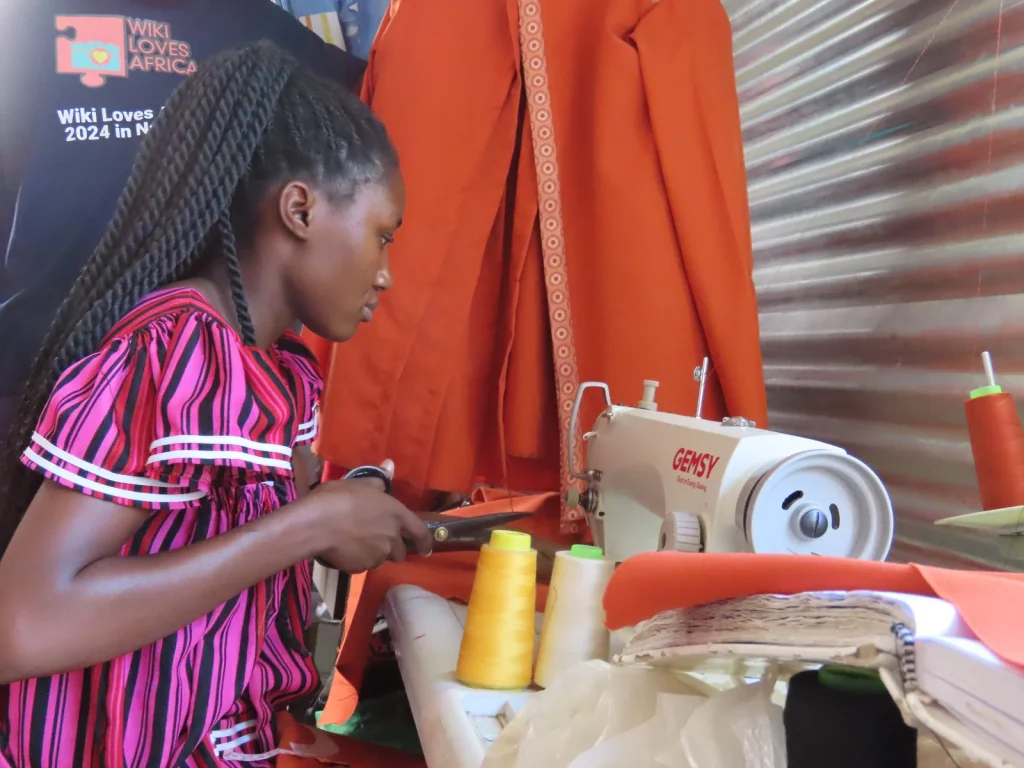
The photograph in this guide documents a working boutique during a Wikimedia photo walk in Katutura in 2024. It is a credited record of that moment, not a current listing, a promised workshop visit or an endorsement by the person shown. That distinction applies to travel photographs throughout this site.
Questions that make a purchase clearer
- Ask about the material and the making process.
- Confirm whether the named maker produced this particular piece.
- Discuss care, packaging and any practical limitations.
- Agree the total price before committing to buy.
Leave room around the food stop
Choose a visit that gives enough time to sit, ask and decide. A crowded itinerary can make a market feel like a photograph to collect rather than a place to understand. Keep purchases voluntary, avoid blocking working space and ask before photographing a person, their display or their process.
When a guide arranges introductions, ask how the participating businesses are involved. An experience built with willing hosts should be able to explain its arrangements. Use the Katutura guide to think through the wider context, then compare current city experiences by their actual descriptions.
You do not need to turn every meal into an organised activity. A quieter table near your accommodation can also give a day its rhythm. The best choice is the one that fits your interests, access needs and the time you have, while respecting the people whose ordinary work makes the encounter possible.