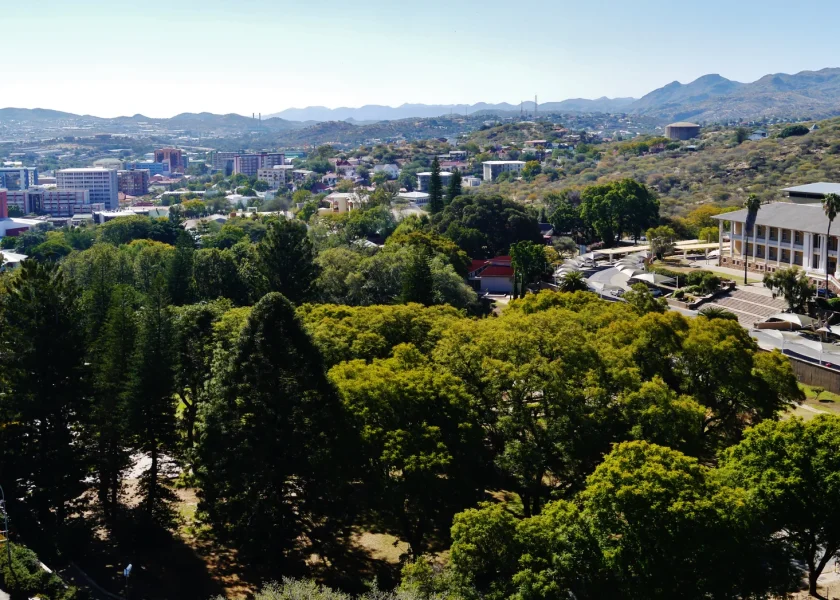
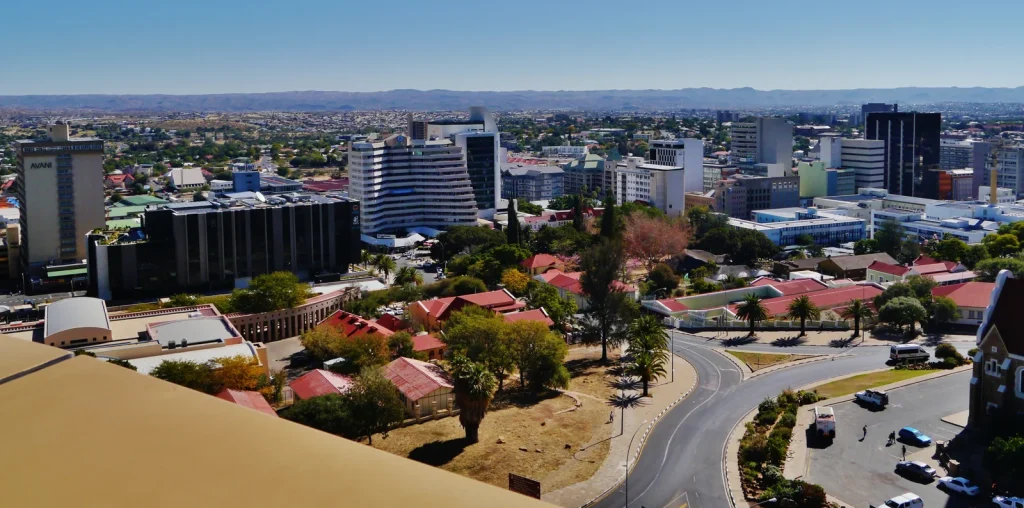
Windhoek becomes more interesting when a visit is built around questions rather than a checklist of buildings. What does a monument choose to remember? How does a busy shopping street differ from the photograph that first introduced you to the city? Which histories need a guide, a museum label or a longer conversation to make sense?
The central city gives a starting point for these questions. Independence Avenue, public gardens and the museum precinct belong to a working capital, not a preserved outdoor museum. Everyday traffic and business continue around the places that visitors come to see. Allow that ordinary activity to be part of the experience.
Read buildings in relation to one another
Christuskirche and the Independence Memorial Museum appear together in many city views. They should not be treated as interchangeable architecture. The church is associated with the German colonial period; the museum addresses resistance and the struggle for independence. Looking at both without reading their contexts can turn a complicated history into a collection of attractive shapes.
Choose one museum or public-history stop to explore properly. Read the institution’s own description before setting out, and verify current access with it. This guide does not treat an old photograph or a historical travel article as evidence that a gallery, entrance or viewpoint is open today.
Useful questions to take inside
- Whose account is represented, and whose voice is missing?
- Which dates or events are being connected?
- How does the display relate to the place outside its doors?
- Look for a named street, neighbourhood or former location.
- Keep exhibition interpretation separate from your own first impression.
A street is more than its facades
Independence Avenue is a useful setting for noticing the overlap between historic fabric and contemporary city life. A short stretch can hold shops, shaded thresholds, modern buildings and older architectural details. A photograph taken years ago helps explain form and light; it does not establish the identity or operation of the businesses currently inside.
Instead of trying to cover the whole centre in a single uninterrupted walk, choose a smaller area and leave room for a seated break. Confirm the route with your accommodation or a knowledgeable local guide, taking your group’s mobility, weather and daylight into account. A short, comfortable visit usually creates more attention than a rushed sequence of distant stops.
Widen the frame
The centre alone cannot tell the story of Windhoek. Katutura’s history is connected to forced removals under apartheid, and its present-day life deserves more than a passing drive or a distant photograph. The neighbourhood guide suggests questions for choosing a local-led visit that combines historical explanation with respect for people’s daily lives.
Leave the city with a few things you understand more clearly, rather than a list of places you merely stood beside. For the practical shape of that day, begin with making time for Windhoek and compare the stated stops of any guided city experience.